
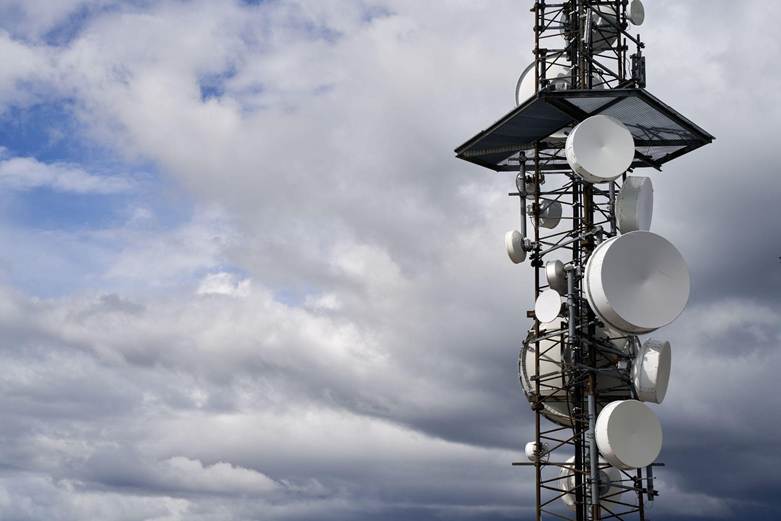
When positioning accuracy matters, the antenna is more than a passive component. A calian GNSS antenna can influence how effectively a GNSS system receives satellite signals in environments affected by multipath, interference, obstruction, and other sources of signal degradation.
For applications such as autonomous vehicles, precision agriculture, surveying, transportation, timing, and unmanned systems, antenna selection should therefore be considered part of the overall positioning architecture. Frequency coverage matters, but so do filtering, polarization, multipath rejection, phase-center behavior, installation, and environmental durability.
Why Antenna Design Matters to GNSS Performance
A GNSS antenna sits at the beginning of the signal chain. Before a receiver can calculate a position, the antenna must capture extremely weak signals arriving from satellites and pass usable RF information to the receiver. The quality of that first stage can affect the performance of everything that follows.
A calian GNSS antenna is designed for applications where factors such as multipath and RF interference can affect positioning. Calian, formerly Tallysman, identifies interference mitigation and multipath performance as important characteristics across its GNSS antenna technologies.
This becomes especially important when a system needs more than basic location information. A positioning application that depends on repeatable measurements may be much less tolerant of signal distortion than a consumer navigation application.
When evaluating an antenna, system designers should consider:
- The GNSS constellations and frequencies required
- Expected multipath conditions
- Nearby sources of RF interference
- Required positioning accuracy
- Antenna mounting and ground-plane conditions
- Environmental exposure
- Size, weight, power, and integration constraints
Looking at these factors together provides a more useful basis for antenna selection than comparing a single specification.
How a Calian GNSS Antenna Can Address Multipath
Multipath occurs when satellite signals reflect from surfaces before reaching the antenna. Buildings, vehicles, terrain, and other structures can create reflected signal paths that arrive alongside the direct signal.
The U.S. National Geodetic Survey identifies multipath as an important consideration in GNSS antenna environments and notes that reflective surfaces near an antenna can contribute to the problem.
Antenna design can help reduce the influence of these reflected signals. Dual-feed antenna architectures, circular polarization characteristics, and carefully controlled radiation patterns can all contribute to multipath rejection.
This does not mean a calian GNSS antenna can eliminate multipath in every installation. The physical environment remains important. However, choosing an antenna designed with multipath performance in mind can give the positioning system a better starting point, particularly where reflective surfaces cannot easily be avoided.
Filtering Matters When GNSS Operates Near Strong RF Signals
GNSS signals are relatively weak when they reach the Earth’s surface, so nearby high-power radio-frequency transmissions can create challenges for the receiver. Cellular signals, harmonics, and other transmitters may affect GNSS equipment when their frequencies or harmonics fall close enough to the GNSS bands.
This is one reason filtering is an important antenna specification rather than a minor technical detail. Calian’s current antenna technologies include pre-filtering and extended filtering designed to reduce the impact of out-of-band signals and help protect the GNSS signal chain.
For an engineer evaluating a calian GNSS antenna, the relevant questions include:
- What RF signals are present around the intended installation?
- Does the antenna include appropriate filtering?
- Which GNSS bands need to be protected?
- Could nearby transmitters create saturation or interference?
- Does the antenna’s filtering approach match the application’s RF environment?
These questions become particularly relevant for equipment operating in cities, on vehicles, near communication systems, or in other spectrum-congested environments.
Frequency Coverage Should Match the GNSS Architecture
Modern GNSS systems can use multiple constellations and frequency bands. Depending on the application, a receiver may work with combinations of GPS, Galileo, GLONASS, BeiDou, QZSS, NavIC, SBAS, or L-band correction services.
That means frequency coverage should be evaluated alongside the receiver and positioning method. A multi-band antenna can provide capabilities that are valuable for high-precision applications, but broader coverage is not automatically necessary for every system.
Calian’s product range illustrates the variety available. Its antenna portfolio includes single-band, dual-band, triple-band, multi-constellation, and L-band configurations designed for different applications.
For a calian GNSS antenna, the appropriate configuration should therefore be determined by the actual GNSS architecture rather than by selecting the model with the largest number of supported frequencies.
Polarization and Axial Ratio Are More Than Datasheet Numbers
Another important antenna characteristic is polarization. GNSS satellite signals use right-hand circular polarization, so the antenna’s ability to maintain an appropriate circularly polarized response can influence signal reception and multipath performance.
Axial ratio is one specification used to describe this behavior. A lower axial ratio generally indicates a closer match to the desired circular polarization over the specified operating conditions.
Calian’s antenna technologies use dual-feed and other antenna architectures to achieve controlled polarization characteristics. Some current Calian products specify low axial-ratio performance alongside multipath rejection and signal-to-noise benefits.
For engineers comparing a calian GNSS antenna with alternatives, axial ratio should therefore be considered in the context of the complete antenna design rather than treated as an isolated performance number.
Installation Can Change the Real-World Result
Antenna performance does not exist independently of installation. Mounting position, nearby materials, ground-plane characteristics, cable routing, and surrounding electronics can all influence the signal environment.
This is particularly relevant for embedded antennas. An antenna installed inside a compact device may encounter a very different RF environment from a roof-mounted antenna with an unobstructed view of the sky.
NavtechGPS notes that ground planes can play a significant role in GNSS ceramic patch antenna performance, while Calian provides embedded antenna options intended for integration into specific OEM applications.
The U.S. National Geodetic Survey similarly emphasizes secure antenna installation for demanding reference-station applications and highlights the importance of antenna stability and site conditions.
This means an otherwise capable calian GNSS antenna still needs an appropriate installation strategy. Antenna selection and mechanical integration should be treated as connected engineering decisions.
Environmental Requirements Can Shape Antenna Selection
GNSS antennas used in vehicles, UAVs, agricultural equipment, rail systems, or outdoor infrastructure may face vibration, moisture, temperature changes, dust, and other environmental conditions.
An antenna that performs well in a controlled laboratory environment may not be suitable for a permanently exposed installation unless its mechanical and environmental specifications match the application.
For example, Calian offers antenna designs with weather-resistant housings for demanding outdoor applications, while its portfolio also includes lightweight embedded configurations for applications where size and weight are more restrictive.
This makes environmental specifications an important part of evaluating a calian GNSS antenna. The correct choice needs to balance RF performance with the physical realities of the platform.
Evaluate the Antenna as Part of the Complete System
The most useful antenna selection process starts with the application rather than the product catalog. Engineers can first define the positioning requirements and then work backward toward the antenna characteristics needed to support them.
A practical evaluation can include:
- Required accuracy, availability, and update rate
- Supported constellations and frequencies
- Multipath exposure
- Nearby RF interference
- Required filtering
- Mounting and ground-plane conditions
- Environmental and mechanical requirements
- Receiver, cable, and connector compatibility
This approach also helps prevent over-specification. Not every system needs the same combination of bandwidth, filtering, gain, environmental protection, and multipath performance.
Matching Antenna Design to the Actual Application
The right calian GNSS antenna is ultimately the one whose characteristics align with the positioning system and its operating environment. An autonomous vehicle, survey instrument, agricultural machine, timing system, and UAV can face very different signal challenges even when all of them rely on GNSS.
The Federal Communications Commission (FCC) provides guidance on managing radio-frequency interference, reinforcing why antenna design should be evaluated as part of the broader signal environment. Antenna design can influence how effectively a system manages multipath, interference, polarization, frequency coverage, and environmental exposure. These factors are interconnected, so evaluating them together provides a clearer picture of expected GNSS system performance.
For demanding GNSS applications, the most useful question is therefore not simply which antenna has the strongest specifications. It is whether the antenna’s design addresses the specific signal, installation, and environmental conditions the system will encounter. That application-first approach can lead to a more reliable GNSS architecture and a more informed antenna decision.